Lumistrips UK
 Lumistrips US
 Lumistrips ES
 Lumistrips ITA



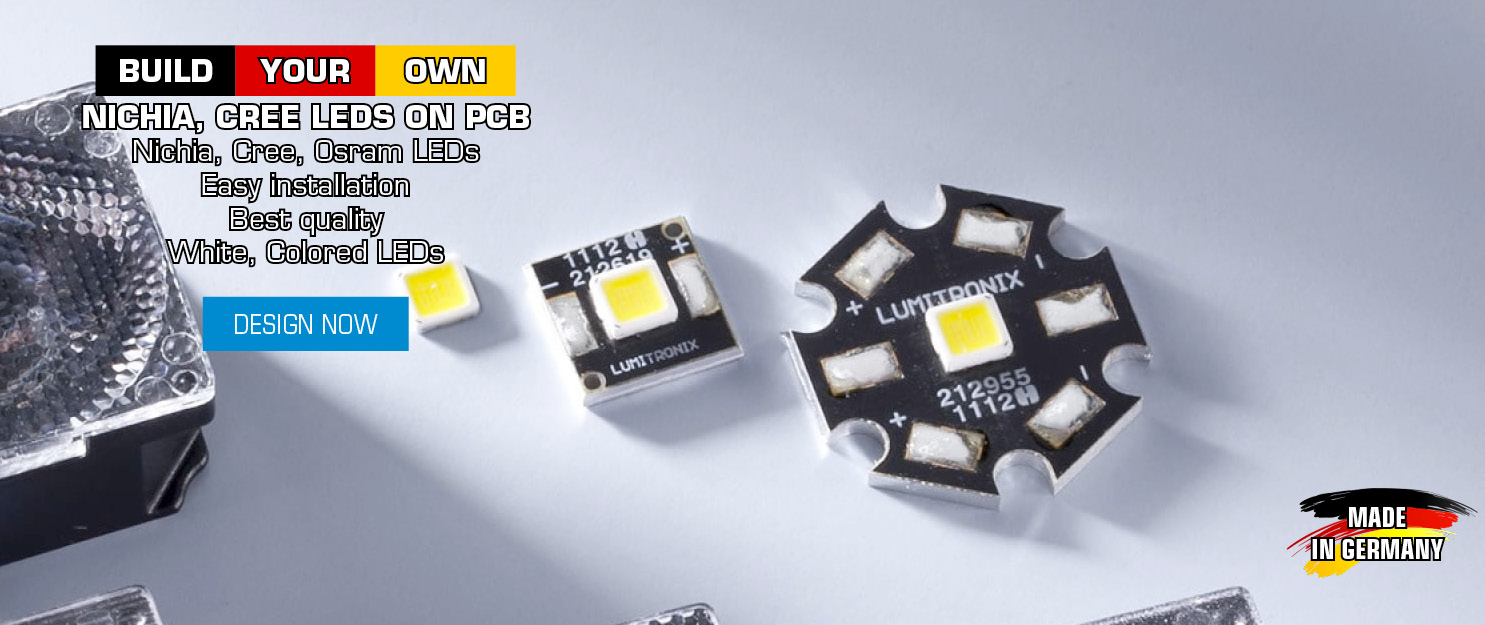
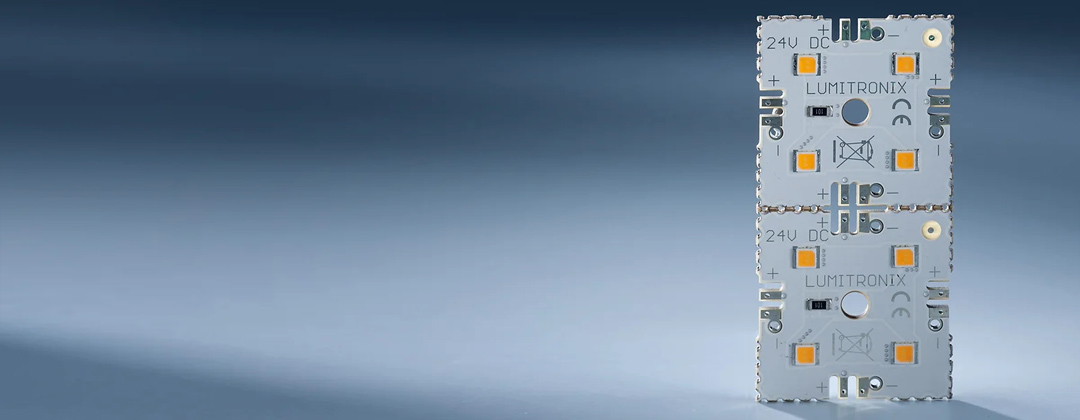
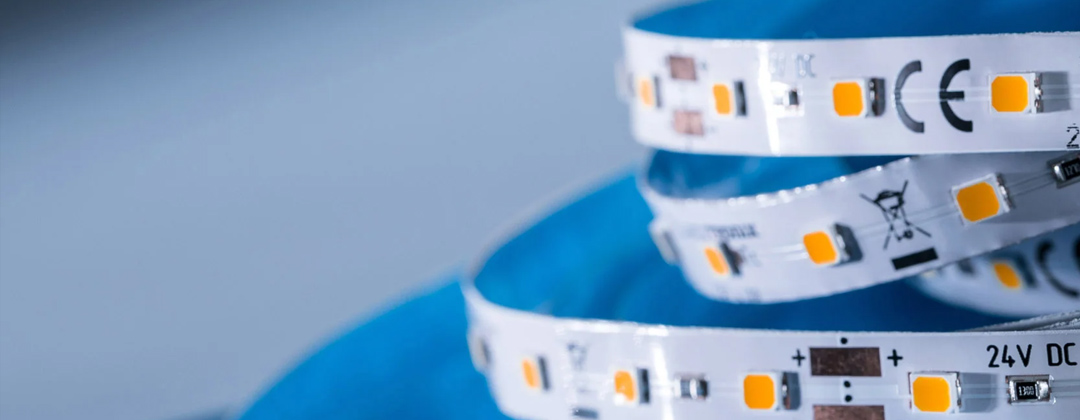
Nichia / Samsung / Seoul / Cree / Osram LEDs
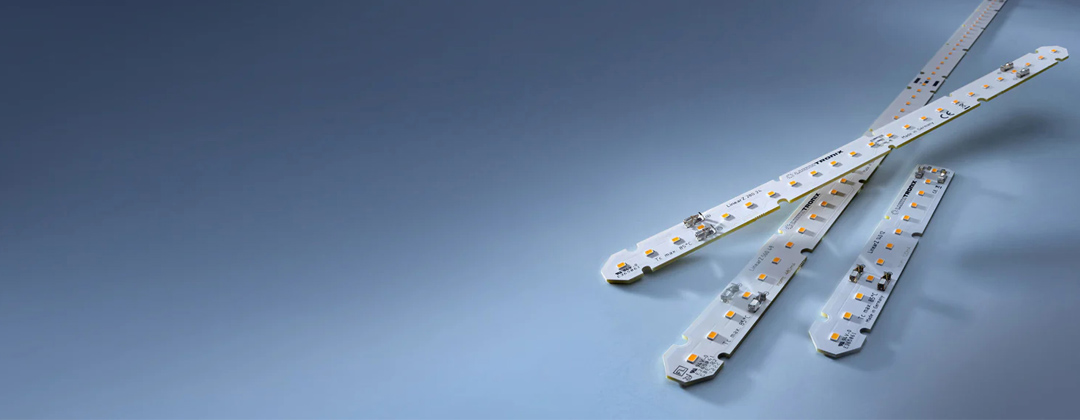
Plug & Play system with many sizes available
White LEDs 1800-7800K CRI70-99
Flexible & Rigid PCB options
 Lumistrips EN
 Toggle Nav
Lumistrips EN
Toggle Nav
Lumistrips EN
| Flux (Lumen): | lm | |
| Angel: | ° | |
| Intensity (Candela): | mcd |
*All results are for informative purpose only.
This calculator gives accurate results for wide viewing angles, such as our LED strips with 120 deg or more. It has been tested, and it gives close results to the Nichia NSSW LEDs. For narrow view angles, such as those of 5mm and 3mm LEDs, check there is a different version of this calculator.
Leading-Edge LED Strips & Modules with the Latest Technology, Made in Germany
These three words describe the most commonly used units for measuring lighting. They are all related, but represent entirely different things.
Lumen is the SI unit of luminous flux, equal to the amount of light emitted per second in a unit solid angle of one steradian from a uniform source of one candela. In more understandable terms - the total amount of light emitted by a source.
Lux is the SI derived unit of illuminance and luminous emittance, measuring luminous flux per unit area. It is equal to one lumen per square metre. or,more clearly. In short - how much light is received by a surface.
Candela is the SI unit of luminous intensity. One candela is the luminous intensity, in a given direction, of a source that emits monochromatic radiation of frequency 540 × 1012 Hz and that has a radiant intensity in that direction of 1/683 watt per steradian.It is the light emitted from a source in a particular direction, that is - per steradian.
How to calculate lumens from candela
Both candela and lumen are units of emitted light. If you know one of these two values (either luminous intensity or luminous flux), you can easily convert to the other.
As mentioned earlier, candelas are a measure of light output per steradian (solid angle unit). This means that this value is independent of the directions in which the light is emitted. However, lumens are the total amount of light emitted and depend on the type of light source. For example, a star glows uniformly in all directions. However, a directional LED (spotlight) can only illuminate a small area around it.
To convert from candela to lumen, multiply the value in candela by the angular span of the light source in steradia:
Lumen = Candelas * Ω
For a light source that emits light uniformly in all directions, Ω = 4π.
Steradians are a unit for measuring angles in a 3D space (just like radians for a 2D space). A steradian on a sphere with a radius of one meter gives an area of one m².
Instead of using steradians, you can also describe how the light is emitted with regular 2D angles. Then you need to know the peak angle θ between two axes that have a common point at the light source:
You can then define the angle span as a function of the vertex angle:
Ω = 2π * [1 - cos(θ/2)]]
Finally, you can use this formula to convert between lumens and candela:
Lumen = Candelas * 2π * [1 - cos(θ/2)]