Tagged with 'Photosynthetic Photon Flux Density (PPFD)'

PPFD Uniformity and Optics: Why Light Distribution Matters as Much as Spectrum in LED Grow Lights

horticulture LED grow light with optics

The most common mistake in horticulture LED lighting isn't the spectrum.
 
It's assuming that because the LEDs emit the right photons, the right photons reach the plants.
 
PPFD uniformity — the consistency of light delivery across the canopy — determines whether a well-specified LED system actually performs as designed or squanders its spectral
investment in hotspots and dark zones.
 
Our new article covers:
 
→ PPF vs. PPFD — the distinction that changes everything
→ Why bare LEDs cannot achieve uniform canopy coverage
→ Primary optics: Osram Batwing and Cree Horizon explained
→ Secondary optics: LEDiL, Carclo, Gaggione, ARI compared
→ Beam angle specification by installation type
→ The economics of getting optics right

Read more

LED Grow Light Spectrum by Crop: Lettuce, Tomato, Strawberry & Herbs

LED lighting spectrum engineering for specific crops — lettuce, tomato, strawberry and herbs under horticulture grow lights

There is no single optimal LED spectrum — plant responses to light are species-specific. This article translates more our 20 years experience into LED lighting into practical spectral recommendations for horticulture LED grow lights for lettuce, spinach, kale, basil, pepper, tomato, cucumber, strawberry, and medicinal herbs. Covers red/blue ratios, PPFD targets, far-red guidance by growth stage, and which module architecture fits each crop type.

Read more

LED Lighting for Horticulture - The Complete Engineering Guide

Horticulture LED lighting system in a commercial greenhouse        with custom LED modules above crop canopy

Light controls 90% of plant growth genes — yet most horticulture lighting decisions are still made with the wrong metrics. This guide covers the photobiology behind LED spectrum design, how to evaluate LED components from Nichia, Cree, Osram and Seoul Semiconductor, optics and thermal engineering, PCB substrate selection, and the TCO framework that determines whether a system pays for itself.

Read more

The Guide to Efficient Horticultural Lighting Systems with Full Spectrum LEDs

High performance Horticulture lighting with LED Modules

Growing plants in closed and fully controlled environments under artificial lighting has become increasingly popular in recent years. As competition intensifies, the demand for low-cost, high-speed results has placed a significant focus on the efficiency of lighting systems. In this comprehensive guide, we'll walk you through the essential steps to create an efficient and cost-effective lighting system for optimal plant growth.

1. Research the Spectrum and Intensity of Light Your Plants Need

The first step in designing an efficient lighting system is to determine the appropriate spectrum and intensity of light required for your specific plants. Different plants have varying needs in terms of light spectrum and intensity for optimal growth. To learn more about horticultural lighting, read our detailed article [here].

2. Choose the Right Photosynthetic Photon Flux Density (PPFD) and Light Color for Your Plants

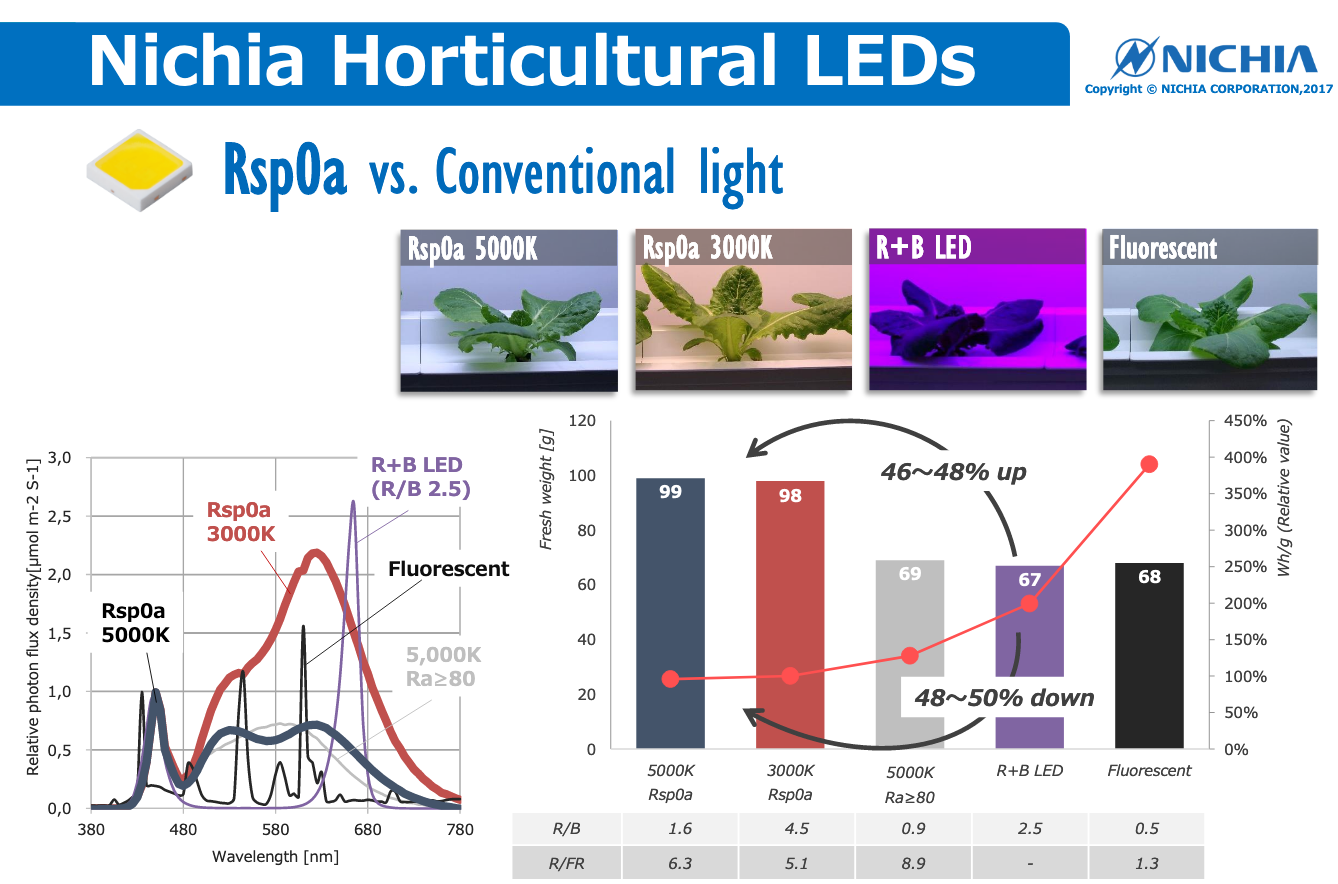
With advancements in technology, special or full-spectrum white light LEDs have emerged as the most efficient and cost-effective light sources for plant growth. Our full-spectrum/Rsp0a CRI98+ LED strips will help your plants grow up to 50% more than conventional light sources, such as standard white LEDs, a combination of red and blue LEDs, or fluorescent tubes, while consuming less energy.

Selecting the appropriate color temperature is also essential. A 3000K white color temperature results in more aesthetically pleasing plants, while a 5000K color temperature promotes faster growth.

Nichia LED for Horticulture

Read more