
 Lumistrips UK
 Lumistrips US
 Lumistrips ES
 Lumistrips ITA
LED Lighting for Horticulture - The Complete Engineering Guide
-
 By
Lumistrips LED Professional
By
Lumistrips LED Professional
- Apr 15, 2026

LED Lighting for Horticulture: The Complete Engineering Guide
A technical reference for growers, vertical farm operators, and horticultural engineers on how modern LED module design translates directly into plant biology outcomes — and what to look for when specifying a system.
Why Lighting Architecture Is the Most Consequential Decision in Controlled-Environment Agriculture
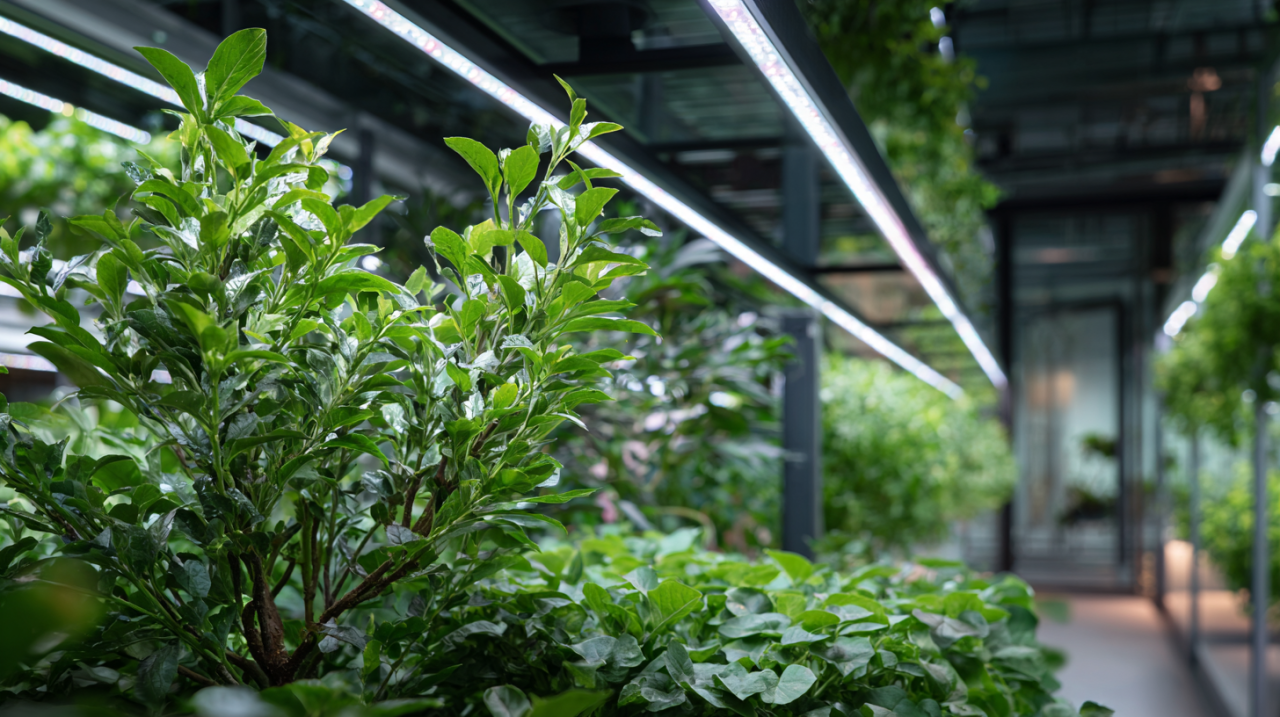
Light controls approximately 90% of the genes involved in stimulating plant growth. In controlled-environment agriculture — greenhouses, vertical farms, tissue culture facilities, and plant factories — the lighting system is therefore not a commodity purchase. It is the primary engineering lever for photosynthesis efficiency, crop morphology, nutritional composition, cycle duration, and long-term operating cost.
For much of the industry's history, this decision was made with the wrong metrics: lux values, correlated colour temperature, and wattage — all of which describe light as humans perceive it, not as plants use it. High-pressure sodium (HPS) lamps, which convert only around 30% of input energy into usable light and radiate the rest as heat, became the greenhouse standard not because they were well-suited to plant biology, but because they were the most powerful artificial sources available.
LED technology has changed the terms of the problem entirely. LED systems can now convert approximately 50% of electricity into light, can be spectrally tuned to plant photoreceptor absorption peaks, emit negligible radiant heat directly onto the canopy, and can be dimmed and dynamically controlled in real time. A comparative study of greenhouse tomato production found that growers can achieve equivalent yields using LEDs while consuming only 25% of the energy required by traditional HPS lighting.
But not all LED systems are equivalent. The performance gap between a purpose-engineered custom module and a commodity grow light is not marginal — it separates operators who hit target PPFD uniformity across the canopy, control phenotype through spectral precision, and recover capital within 12 months, from those running systems that underperform on all three dimensions.
This article is the foundation of Lumistrips' horticulture LED series. It covers the core photobiology, LED technology landscape, module engineering principles, and economic framework that underpin every design decision in a high-performance horticulture lighting system.
Lumistrips Horticulture LED Series
This is the first article in our ongoing horticulture LED series for growers, vertical farm operators, and horticultural engineers. New articles are published regularly — covering topics including spectral engineering for specific crops, full-spectrum vs. red/blue performance data, PCB substrate selection, PPFD uniformity and optics, LED lifetime and TCO, vertical farm module design, daylight harvesting, photoperiod control, nutrient quality, disease management, and more.
Further articles in this series will be linked here as they are published.
The Plant Biology That Drives Every Spectral Decision
Photosynthetically Active Radiation (PAR) and Why the Window Is Wider Than You Think
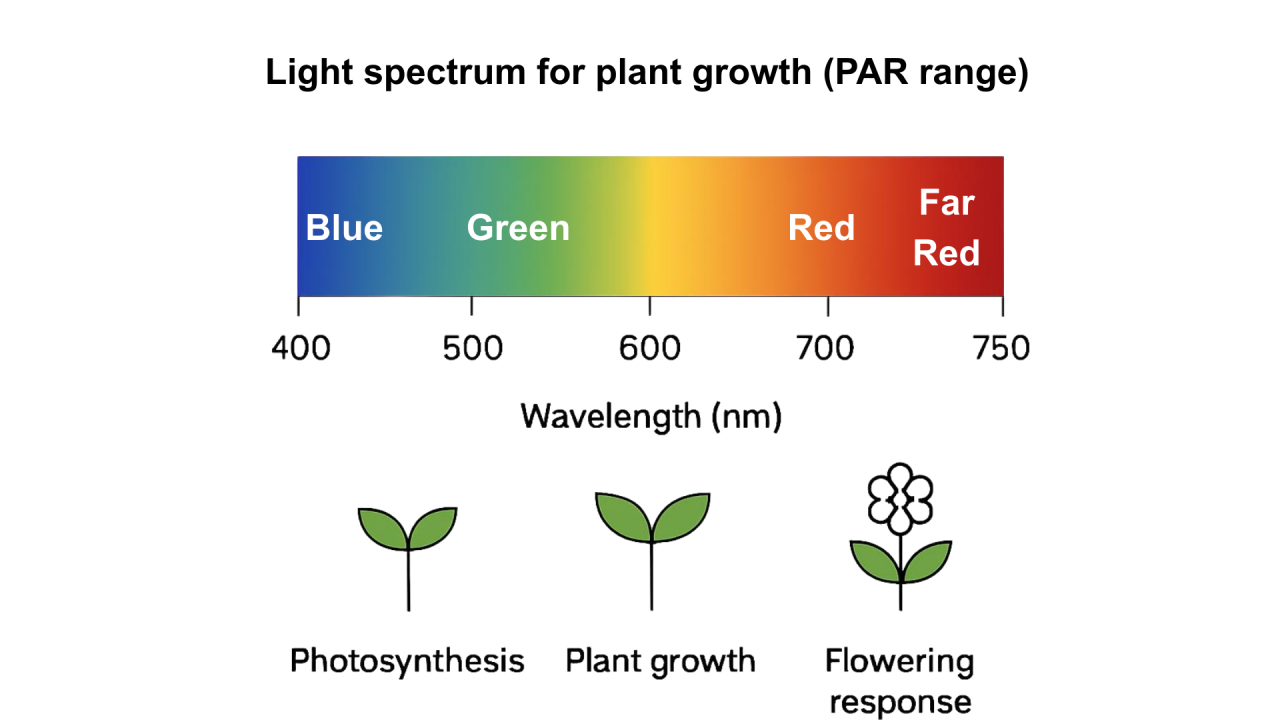
The foundational metric in horticulture lighting is Photosynthetically Active Radiation (PAR) — electromagnetic radiation in the 400–700 nm range that plant chloroplasts can absorb and use to drive photosynthesis. PPFD (Photosynthetic Photon Flux Density), expressed in µmol m⁻² s⁻¹, quantifies the number of PAR photons reaching a unit plant surface per second, and is the primary performance benchmark for any horticulture luminaire.
But PAR is a simplification. Research has demonstrated that photons between 600–630 nm are 20 to 30% more advantageous to plants than those in the 400–540 nm range in terms of photosynthetic energy contribution. Plant photoreceptors also respond meaningfully to wavelengths outside the classical PAR window — particularly in the far-red region (700–800 nm) — with significant consequences for growth architecture, flowering behaviour, and cycle duration. Designing to the PAR boundary alone leaves significant agronomic value on the table.
The Three Photoreceptor Systems
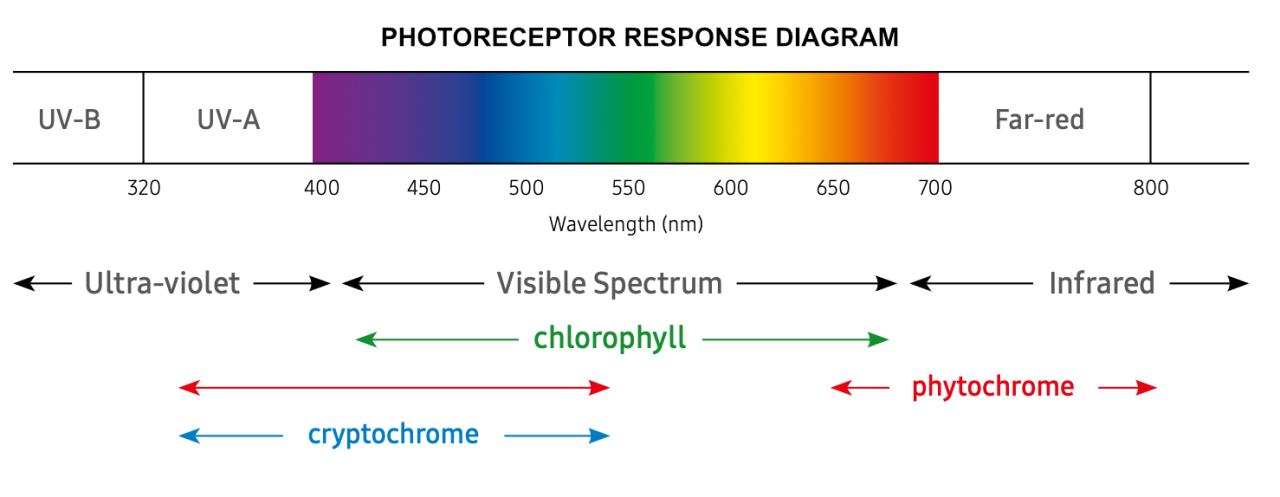
Plant responses to light are mediated by three primary photoreceptor families, each sensitive to specific wavelength ranges. Understanding these systems is not academic — they are the biological reason why spectral design choices produce different agronomic outcomes.
Phytochromes (PHY) respond to red (600–700 nm) and far-red (700–800 nm) light. Phytochrome exists in two interconvertible forms: Pr, which absorbs red light at ~660 nm and converts to the biologically active Pfr form, and Pfr, which absorbs far-red at ~730 nm and reverts to Pr. The red-to-far-red ratio plants measure is a key signal for canopy density assessment, flowering time regulation, and stem elongation through the shade avoidance response.
Cryptochromes (CRY) and Phototropins (PHOTO) are active in the blue (400–500 nm) and UV-A (315–400 nm) ranges. Cryptochromes inhibit stem elongation and regulate stomatal conductance. Plants with adequate blue light exposure are characteristically more compact, with higher fresh and dry mass accumulation. The peak wavelength for maximal cryptochrome activity sits at approximately 449 nm — a parameter that matters when specifying blue LED components.
UVR8 receptors absorb in the UV-B (280–315 nm) range and activate photoprotective flavonoid accumulation pathways. Moderate UV-B exposure has been shown to improve photosynthesis efficiency when coupled with these protective molecules, and UV-B wavelengths show promise for disease suppression in certain crops.
The practical consequence of this biology: a lighting system designed solely around chlorophyll absorption peaks will drive photosynthesis but may fail to activate the full range of photomorphogenic responses that determine plant architecture, crop quality, and nutritional content.
Why Red and Blue Alone Is Not Enough
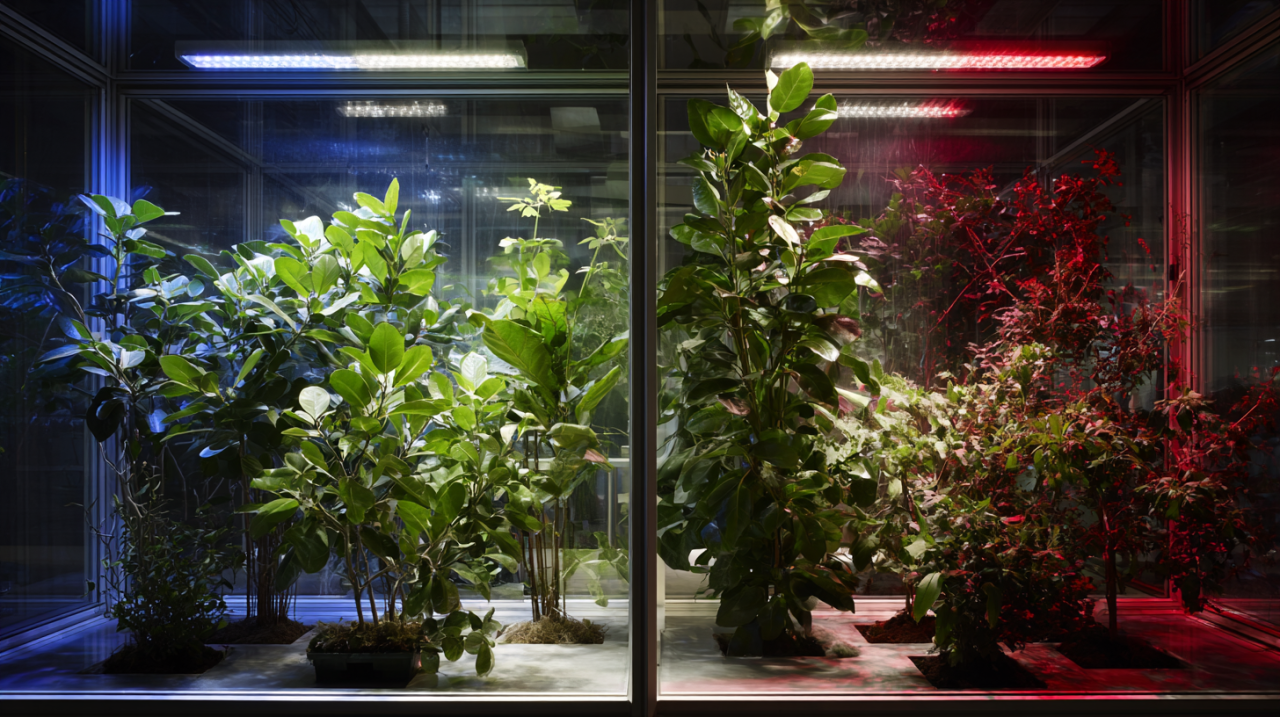
The conventional horticulture spectrum — a combination of ~660 nm red and ~450 nm blue LEDs — was established because these wavelengths correspond to the absorption peaks of chlorophylls A and B. Red light in the 640–720 nm range is the most efficient driver of photosynthesis on a quantum yield basis, and blue light is essential for both vegetative and reproductive growth stages. But a purely red/blue "purple" spectrum creates several documented problems:
- Red light syndrome: Plants grown under 100% red light exhibit abnormal morphology — excessive elongation and physiological stress. Even small additions of blue light (5–10% of total flux) significantly improve fresh and dry mass accumulation in lettuce, spinach, and basil.
- Limited canopy penetration: Red and blue photons are strongly absorbed in upper leaf layers and rarely reach mid- or lower-canopy tissue in dense cultivation environments.
- Worker environment: The purplish light from red/blue systems impairs visual assessment of plant health and deficiency symptoms — a real operational problem in commercial facilities.
- Yield ceiling: Comparative fresh weight data consistently shows that broad-spectrum treatments outperform narrow red/blue combinations across multiple species and cultivars.
Green Light: The Underestimated Wavelength
Green light (490–560 nm) has historically been dismissed because chlorophyll absorption in this region is weaker than in red or blue. This interpretation holds only for an isolated leaf — not for a plant canopy. Green photons have significantly higher transmittance through leaf tissue than red or blue, allowing them to penetrate to lower canopy layers where the other wavelengths have already been absorbed. The result is higher whole-canopy carbon fixation for the same input power.
Beyond penetration, green light contributes to signalling pathways — specifically reversing the UV/blue-light defence mechanism, which can otherwise suppress photosynthetic efficiency. Cross-sectional leaf analysis comparing full-spectrum versus narrow red/blue treatment shows thicker leaves with better-developed vascular structures (xylem and phloem) under full-spectrum conditions. Full-spectrum designs that include green content are not only more crop-effective — they reduce the operational friction of managing plants under a purplish light environment.
Far-Red: The Emerson Enhancement Effect and Shade Avoidance
Far-red light (700–780 nm) is not absorbed by chlorophyll, so it does not directly drive photosynthesis. Its agronomic value lies in two other mechanisms. First, the Emerson enhancement effect: when far-red is delivered simultaneously with red light, photosynthetic quantum yield increases beyond the sum of the individual contributions — a synergistic gain with real energy efficiency implications in multi-spectral system designs.
Second, phytochrome-mediated responses: the red/far-red ratio signals canopy competition to plants. Controlled far-red supplementation allows deliberate management of stem elongation, harvest timing, and — critically for photoperiod-sensitive crops — flowering induction and dormancy prevention. In strawberry production in northern latitudes, supplemental lighting that includes far-red to prevent winter dormancy can maintain year-round vegetative growth, representing a significant commercial value. The design challenge is calibration: excessive far-red drives unwanted elongation in leafy crops and ornamentals, so this is a parameter that must be engineered for the specific crop and production goal.
LED Component Selection: Where Spectrum Starts
The spectral performance of a horticulture luminaire is ultimately determined by the LED components it contains. The choice of package, wavelength bin, phosphor chemistry, and operating point directly sets output spectrum, photon flux, efficiency, and long-term lumen maintenance. Lumistrips selects horticulture LED components exclusively from the world's top five manufacturers — Nichia, Cree, Seoul Semiconductor, Osram, and LumiLeds — because these manufacturers invest in photobiology-aligned product development, characterisation in horticulture metrics, and the application support that custom module design demands.
Nichia Hortisolis™: Targeting All Three Photoreceptor Systems
Nichia's Hortisolis™ series is the result of applied photobiology research rather than optimisation for illumination-metric luminous efficiency. The product is specifically designed to activate all three major photoreceptor classes in a single component: cryptochrome and phototropin (blue), phytochrome (red and far-red), and broader photosynthesis support (green). The far-red content is calibrated to elicit the shade avoidance response without overdriving stem elongation. The green content serves dual purposes — canopy penetration and worker environment quality. Comparative trials have shown yield outcomes that significantly exceed those of standard white LEDs.
Cree: High-Efficacy Multi-Channel Design
Cree LED's horticulture portfolio addresses the efficiency and spectral flexibility requirements of multi-channel system designs. Key products include: Photo Red S Line LEDs at 660 nm, delivering up to 15% higher efficiency than competing red LEDs; Far Red LEDs with 21% higher efficiency than the previous generation (typical wall plug efficiency of 79.2% at 350 mA, 25°C); Photophyll™ Select, the first phosphor-converted LED characterised natively in horticulture metrics, which enables a 10% efficiency upgrade over two-channel (white + red) luminaires or equivalent performance with 50% fewer LEDs; and Horizon LEDs, which can be placed up to 40% closer to the plant canopy than standard LEDs — directly relevant to vertical farm inter-tier spacing constraints.
Osram Hyper Red: The Efficacy Standard at 660 nm
For horticulture luminaires where red-channel efficiency is the primary cost driver, Osram's Hyper Red at 660 nm sets the current benchmark. The latest generation delivers a typical radiant flux of 1,064 mW with a typical wall plug efficiency of 76% at 700 mA. At 4.51 µmol/J, the Hyper Red is substantially more efficient than white LEDs at 3.15 µmol/J for the same photosynthetic photon output. For high-wire tomato and pepper cultivation where red content dominates the spectral requirement, the combination of Hyper Red with Deep Blue LEDs produces the lowest Total Cost of Ownership in comparative analyses.
Seoul Semiconductor SunLike: The Natural Spectrum Approach
Seoul Semiconductor's SunLike series takes the position that a spectral power distribution closest to natural sunlight produces measurable agronomic benefits in certain scenarios, supported by a decade of in-house cultivation research. In controlled lettuce trials, SunLike full-spectrum LEDs produced a yield increase alongside a more than 30% increase in chlorogenic acid and chicoric acid — antioxidant compounds with direct commercial value for premium fresh produce markets where nutritional differentiation carries a price premium.
Optics: Getting Photons to the Canopy Where They Matter
An LED emitting the right spectrum at the right efficiency is necessary but not sufficient. Photons must reach the plant canopy in the right spatial distribution, at the right flux density, with the right uniformity — and losses in the optical pathway directly reduce effective photosynthetic photon efficacy (PPE).
PPFD uniformity is not cosmetic. Non-uniform distribution creates zones of photo-saturation, where photons above the light saturation point of the crop are wasted as heat, and zones of light deficiency, where photosynthesis is suppressed. The net effect is lower whole-canopy productivity per unit input energy. In vertical farms where canopy-to-fixture distance is short and fixed, optical design is the primary tool for achieving uniformity across the growing area.
Lumistrips works with the world's leading secondary optics manufacturers — LEDiL, Carclo Optics, Gaggione, and ARI International Corporation — to integrate precision lenses and reflectors optimised for each application geometry. Lumistrips is an official distributor of LEDiL's full product range and one of a small number of authorised distributors for Carclo Optics globally.
Optic selection is installation-specific. Overhead greenhouse luminaires serving high-wire crops benefit from batwing or wide-angle distributions that maximise horizontal PPFD uniformity at canopy height — a wider radiation pattern can reduce total fixture count for the same PPFD uniformity target, reducing installation and capital costs. Intra-canopy inter-lighting bars require minimal beam spread to avoid mutual shading between tiers. Tissue culture facilities require precise targeting to minimise edge-of-tray variation.
Thermal Management and PCB Substrate: The Engineering Determinants of Lifetime
The single most impactful factor in LED system lifetime is junction temperature. A 10°C increase in operating junction temperature approximately halves the useful life of the LED system, while also decreasing instantaneous light output by 3–8%. Conversely, a well-designed thermal pathway maintains junction temperatures within specification, extending lifetime to 50,000+ hours and maintaining output stability across the operational life of the luminaire.
Lumistrips designs horticulture LED modules to explicit lumen maintenance targets — L90, L80, or L70, representing 10%, 20%, and 30% output degradation respectively — backed by IES LM-80 LED manufacturer data. It is worth noting that 28% of LED lighting manufacturers do not report lifespan data at all, and among those that do, 45% fail to specify which lumen maintenance level applies. Specifying explicitly against a defined standard is part of the engineering rigour Lumistrips brings to every project.
PCB Substrate Selection
PCB substrate choice determines thermal resistance, mechanical properties, and ultimately both performance and cost. Lumistrips manufactures horticulture LED modules across the full range of substrate options:
- Aluminium PCBs provide the lowest thermal resistance path from LED junction to heatsink, making them the standard choice for high-power horticulture luminaires where energy density and continuous operation demand tight junction temperature control.
- FR4 PCBs are the proven, cost-effective industry standard for applications where thermal dissipation requirements are more moderate. FR4's rigidity simplifies installation, and the substrate supports integrated connectors, solder pads, and mounting holes that make field serviceability and system-level interconnection straightforward.
- Flexible substrates — Polyimide (PI/Flex), PET Flex, and Paper Flex — open design possibilities that rigid boards cannot address: conforming to curved mounting surfaces, wrapping around vertical growing structures, and deploying in intra-canopy configurations with custom geometries.
Reel-to-Reel Flex Manufacturing

Lumistrips has advanced flexible LED module production with Reel-to-Reel (R2R) manufacturing — a fully automated, high-precision process that ensures consistent solder joint quality across the full length of a strip. Interconnects are a common failure mode in manually assembled systems, and strips deployed at scale across hundreds of metres of greenhouse growing area must perform consistently across every metre. R2R minimises interconnects, reduces material waste versus sheet-based production, and delivers the cost efficiency required for high-volume greenhouse and vertical farm projects.
Luminaire Formats: Matching the Module to the Application

From Lumistrips' long experience with lighting systems for plant growth, linear LEDs represent the prefered design for horticulture luminaire market — this reflects the practical reality that linear bars and modules are the most versatile form factor for both greenhouse supplemental lighting and vertical farm tier lighting. The breakdown is instructive for system specifiers:
- Single-linear LED bars are the most common typology globally — slim, efficient, and deployable immediately above the canopy in vertical farms and tissue culture rooms without creating heat stress at close range.
- Linear modules are more sophisticated, often adopting rectangular profiles suited to greenhouse high-bay applications and configured to minimise sunlight interception in glass-covered structures.
- Multi-linear and spider-style modules are dominant in vertical farming for full-cycle cultivation of leafy greens and microgreens.
- Inter-lighting systems deliver light directly into the middle of the plant canopy — particularly valuable for high-wire tomato and cucumber where overhead lighting cannot adequately penetrate the canopy depth.
- Panel LEDs are widely used in cannabis production and COB-based high-intensity applications.
The majority of well-designed Lumistrips LED systems achieve efficacy values of 2.5 to 3.5 µmol J⁻¹ at the system level, competitive with the highest-performing categories in the market. The theoretical maximum for a system with 90% red diodes and 10% blue is approximately 4.1 µmol J⁻¹ — the ceiling that ongoing component development is approaching.
System Intelligence: Drivers, Dimming, and Spectral Sensing
Spectrum and flux at installation are the primary design parameters, but the ability to vary them dynamically in response to real growing conditions is increasingly where operational value is generated.
Modern LED drivers offer dimming control that enables PPFD modulation across the photoperiod, spectral ratio variation for different growth stages, and real-time response to daylight availability in greenhouse applications. Daylight harvesting — using spectral sensors to measure natural daylight at canopy level and automatically adjusting supplemental LED output to maintain a target PPFD — is one of the highest-value control applications available. In covered greenhouse operations where natural light contributes meaningfully to the PAR budget for part of the year, this control approach can generate significant energy savings.
Spectral sensors calibrated across PAR wavelengths provide real-time measurement of both total PPFD and spectral composition at the canopy. Control logic can be as simple as dimming LEDs to the level required to achieve a target PPFD set point, automatically compensating for cloud cover, seasonal variation, and glass fouling. The same sensors can also confirm that the spectra specified in the luminaire design are actually being delivered at canopy level — a quality assurance function that matters when crop yield and quality are tightly managed.
LED Lighting and Crop Quality: Beyond Yield
LED spectral control does not only affect biomass accumulation. It is one of the most powerful levers available to growers for managing the nutritional and sensory quality of produce — a dimension that is becoming increasingly relevant as premium fresh produce markets develop.
The research is clear on several key relationships: blue light stimulates vitamin C accumulation and promotes compact vegetative growth; red light increases yield and reduces nitrate content; green light in combination with other wavelengths improves whole-canopy photosynthesis and supports balanced growth morphology; far-red supplementation can increase fresh weight and bioactive compounds in certain crops, though the response is species-specific. Lumistrips' knowledge base of over 100 quantitative studies across vegetables and herbs provides a foundation for evidence-based spectral design recommendations for specific crops and production goals.
In Seoul Semiconductor's lettuce trials, full-spectrum SunLike LED lighting produced more than a 30% increase in chlorogenic acid and chicoric acid compared to standard white LEDs. These antioxidants are associated with demonstrated health benefits. For operators in markets where nutritional differentiation carries a price premium, this is a quantifiable commercial advantage that can be engineered into the lighting specification from the outset.
Total Cost of Ownership: The Economic Case for Getting the Specification Right
Energy accounts for 20–30% of total production costs in controlled environment agriculture. Lighting represents a large proportion of that energy consumption. The economic case for investing in high-efficiency LED systems is not speculative — it is a straightforward TCO calculation.
Modern top-performing LED fixtures can reach break-even versus traditional HPS systems within approximately one year of operation, driven by 40–60%+ efficiency advantages at equivalent PPF output. Over a 5–7 year operational lifespan, the cumulative energy cost difference is substantial. Within LED systems, the efficiency difference between components compounds. An Osram Hyper Red at 4.51 µmol/J versus a white LED at 3.15 µmol/J, across a large greenhouse installation running 16-hour photoperiods, represents a meaningful ongoing cost advantage — one that grows with rising energy prices.
System design decisions also affect TCO directly. Increasing the share of high-efficiency red LEDs relative to white LEDs in a two-channel fixture reduces total system cost non-linearly — reducing the white LED share from 80% to 60% can produce a double-digit percentage system cost saving for the same PPF output. These are not incremental refinements; they are the difference between a system that generates a return and one that does not.
Custom Horticulture LED Solutions from Lumistrips
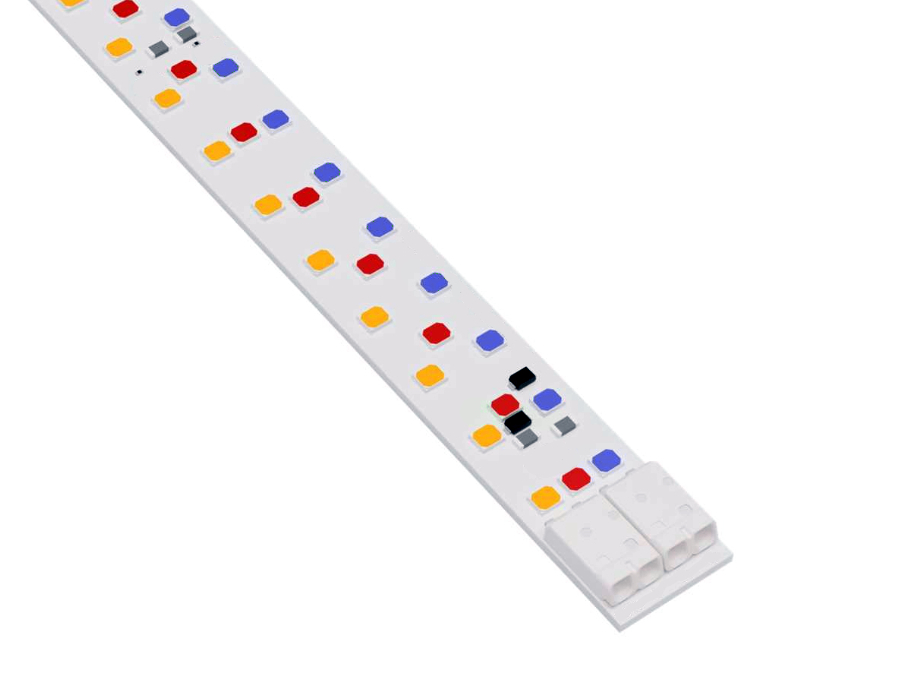
High-performance horticulture LED modules require application-specific engineering at every level: LED component selection aligned with the crop's photobiology, optics designed for the installation geometry, thermal pathways matched to the power density, and a PCB substrate suited to the mechanical and environmental demands of the application. There is no universal solution that optimises all of these simultaneously for every crop and growing format.
At Lumistrips, we have spent more than two decades developing the engineering depth and supply chain partnerships that make genuinely application-specific LED modules manufacturable at commercial scale. We work directly with greenhouse operators, vertical farm developers, and luminaire manufacturers to translate crop requirements and facility constraints into LED module specifications — and then into hardware, made in Germany.
Our horticulture LED modules can be engineered across the full spectral range described in this article: high-efficiency red/blue for maximum PPE in energy-critical applications; full-spectrum designs incorporating Nichia Hortisolis™ or Cree Photophyll™ Select for complex photoreceptor management; multi-channel designs with independent far-red control for photoperiod-sensitive crops. Precision optics from LEDiL, Carclo, Gaggione, and ARI are integrated to deliver target PPFD uniformity for each application geometry.
Thermal management is engineered at the module level — aluminium PCB substrates for high-power overhead fixtures, FR4 for moderate-density supplemental lighting, and flexible polyimide and PET substrates manufactured via Reel-to-Reel automation for intra-canopy, curved-surface, and large-area applications. Every system is designed with explicit L70, L80, or L90 lifetime targets, backed by LED manufacturer data.
Through direct partnerships with Nichia, Cree, Seoul Semiconductor, Osram, and LumiLeds, and with leading optics suppliers LEDiL, Carclo Optics, Gaggione, and ARI International Corporation, Lumistrips brings both the component access and the application engineering to horticulture projects that demand precision rather than estimates.
Working on a horticulture lighting project?
Whether you are specifying a greenhouse supplemental lighting system, a vertical farm LED module, or a tissue culture or research facility, the Lumistrips team can help you translate your crop requirements into an engineered lighting solution. Get in touch with our horticulture lighting specialists.








