
 Lumistrips UK
 Lumistrips US
 Lumistrips ES
 Lumistrips ITA
Full Spectrum LEDs vs Red-Blue Grow Lights
-
 By
Lumistrips LED Professional
By
Lumistrips LED Professional
- Apr 23, 2026

Full Spectrum LEDs vs Red-Blue Grow Lights: A Technical Decision Guide for Growers
A head-to-head comparison for vertical farm operators and horticultural engineers who need to choose deliberately — not by convention.
The Question Behind the Question
When growers debate full spectrum versus red-blue lighting, they are really asking several different questions at once: Which system delivers better yield? Which is more energy-efficient? Which gives better crop quality? And — the one that rarely gets asked directly — which delivers the most value for this specific crop, at this specific growth stage, in this facility?
The existing literature offers enough data to move beyond generalizations. This article synthesizes current research and engineering tradeoffs to give growers a structured basis for making that decision.
What Red-Blue Systems Actually Do Well
Red-blue LED combinations were not an arbitrary choice. They emerged from a clear rationale: chlorophyll a and chlorophyll b have primary absorption peaks in the red (around 660–680 nm) and blue (430–450 nm) ranges. Targeting those peaks maximizes energy delivery to the photosynthetic machinery per watt consumed.
From a pure photon efficacy standpoint, this logic holds. Hyper Red LEDs at 660 nm carry no phosphor conversion losses — energy goes directly to photons at a wavelength the plant actively absorbs. Leading Hyper Red LEDs from ams OSRAM, for example, achieve wall plug efficiencies above 76%, delivering photon efficacy values around 4.51 µmol/J. White LEDs, by contrast, sit closer to 3.15 µmol/J — a meaningful gap at the scale of a commercial grow room.
For crops where biomass accumulation is the primary metric and where production speed is the dominant constraint, red-blue systems can be competitive. High-volume leafy greens under tight cycle times are the most defensible use case.
But the limitations surface quickly when performance criteria broaden.
Where Red-Blue Approaches Fall Short
The Red-Light Syndrome Problem
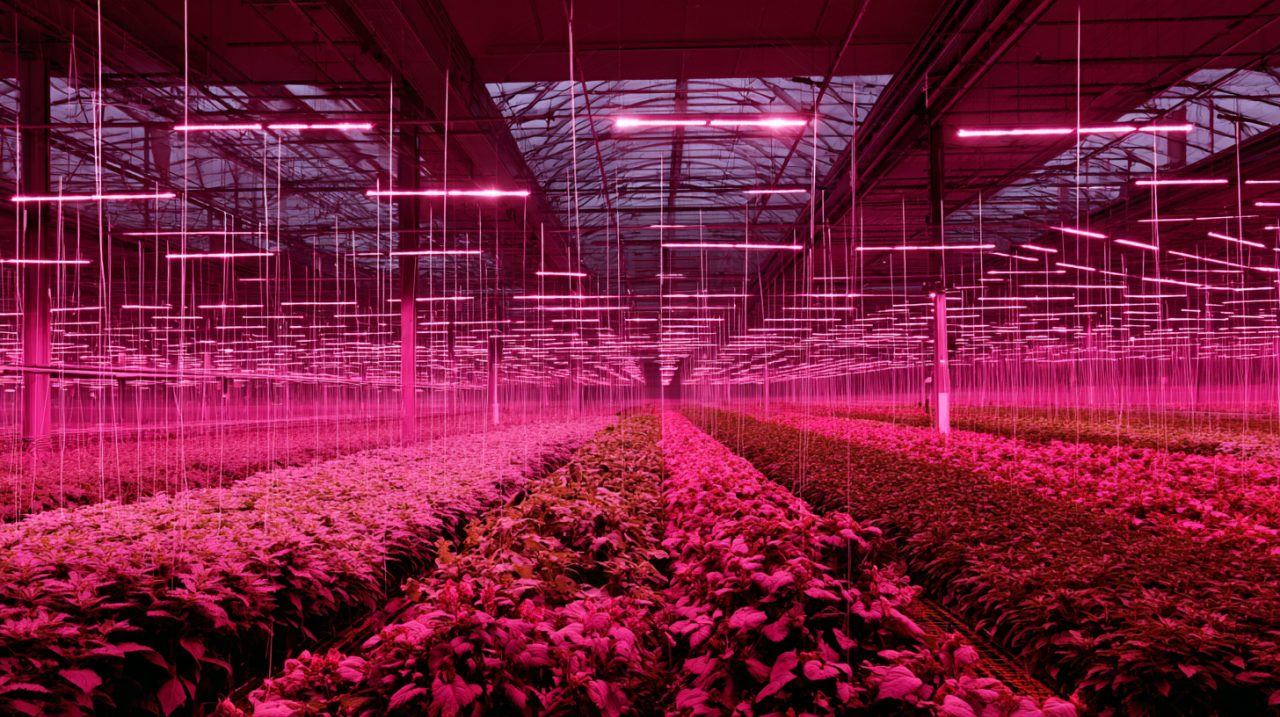
Operating at 100% red light — or near-monochromatic red-dominant ratios — consistently produces problematic results across multiple crop types. Spinach, lettuce, and sweet basil all show degraded growth under 100% red illumination compared to red-blue combinations. The phenomenon, documented as "red-light syndrome," manifests as elongated, structurally weak plants with poor pigmentation. Leaf chlorophyll content drops, and in some cases, fruit pigmentation fails to develop entirely — an outcome observed in pepper under purely red illumination.
This is not just a morphology issue. Plants grown under red-only light develop thinner cell walls and show disorganized microfibril structure. Blue light stimulation, by comparison, produces cell wall thickness roughly three times greater than far-red light, with well-organized circumferential microfibrils — directly affecting structural integrity and shelf life.
The implication: red-dominant designs require blue supplementation to remain agronomically viable, and the ratio matters considerably. Research across lettuce, kale, spinach, basil, and pepper found that 91% red + 9% blue produced the best chlorophyll a, chlorophyll b, and total chlorophyll content across most species — with antioxidant capacity peaking at 83% red + 17% blue for lettuce, spinach, and kale.
Canopy Penetration and Light Distribution
Red and blue photons are heavily absorbed at the leaf surface. In a dense canopy, lower leaf layers receive a fraction of the light reaching the top. This creates a stratified photosynthetic efficiency profile that limits whole-plant productivity.
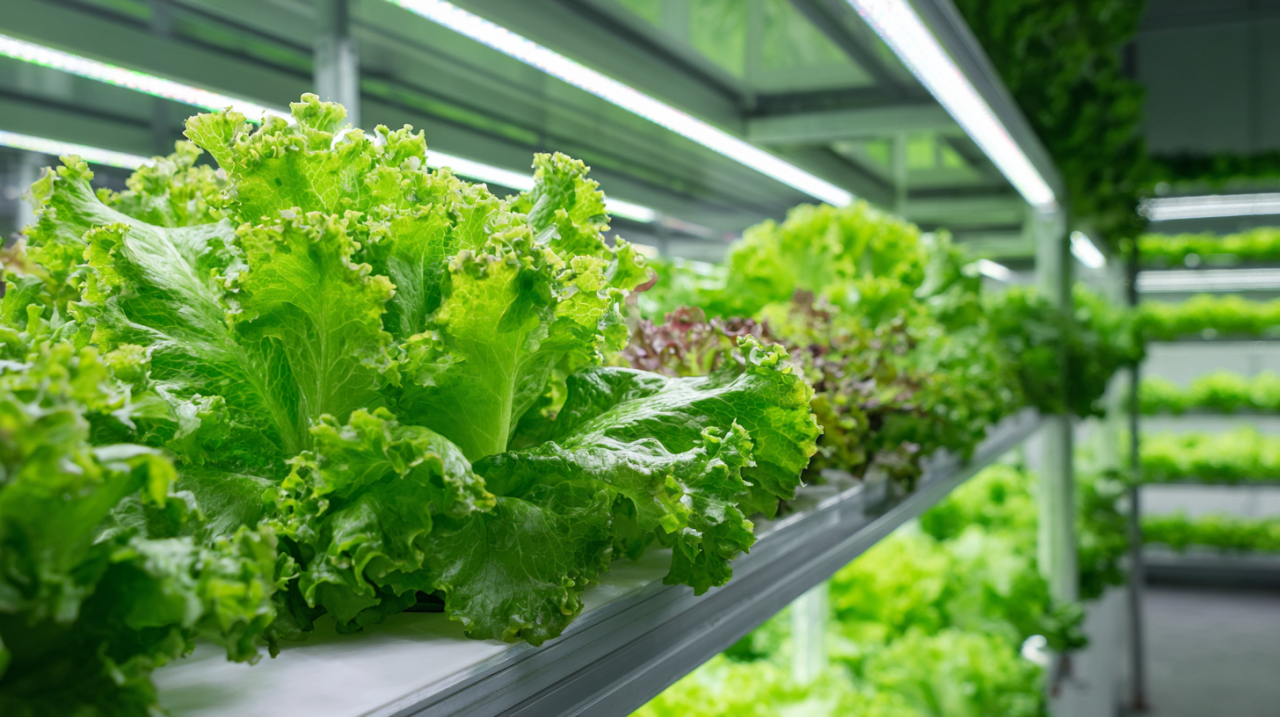
Green light (500–600 nm), which red-blue systems largely omit, has a markedly different behavior. It penetrates deeper into leaf tissue and the plant canopy, reaching layers that red and blue cannot access effectively. Carbon fixation in lower leaves contributes meaningfully to overall plant yield — and it is underexploited in narrow-spectrum installations.
In one study comparing broad versus narrow spectral treatments, fresh weight results consistently favored the broader spectra. Adding green and yellow wavelengths to a red-blue base outperformed the dual-color approach across multiple crop types.
The Crop Monitoring Problem
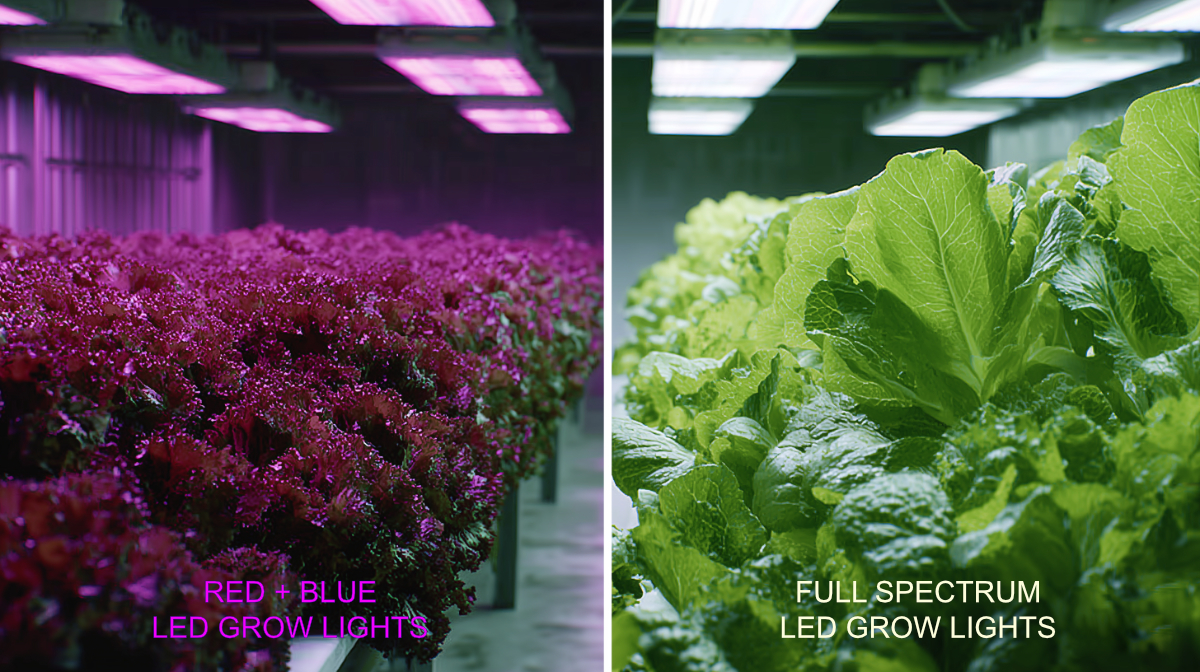
Under red-blue illumination, the combined spectral output creates a purplish hue that makes it nearly impossible to visually assess crop health. Nutritional deficiencies, early disease symptoms, and physiological disorders that would be immediately visible under white or full-spectrum light are masked. This is not a minor inconvenience — in a commercial grow, delayed detection of a crop health issue translates directly into revenue loss.
What Full Spectrum Systems Add — and What They Cost
The Biological Case
Full spectrum grow lights are designed to activate the complete set of plant photoreceptors simultaneously:
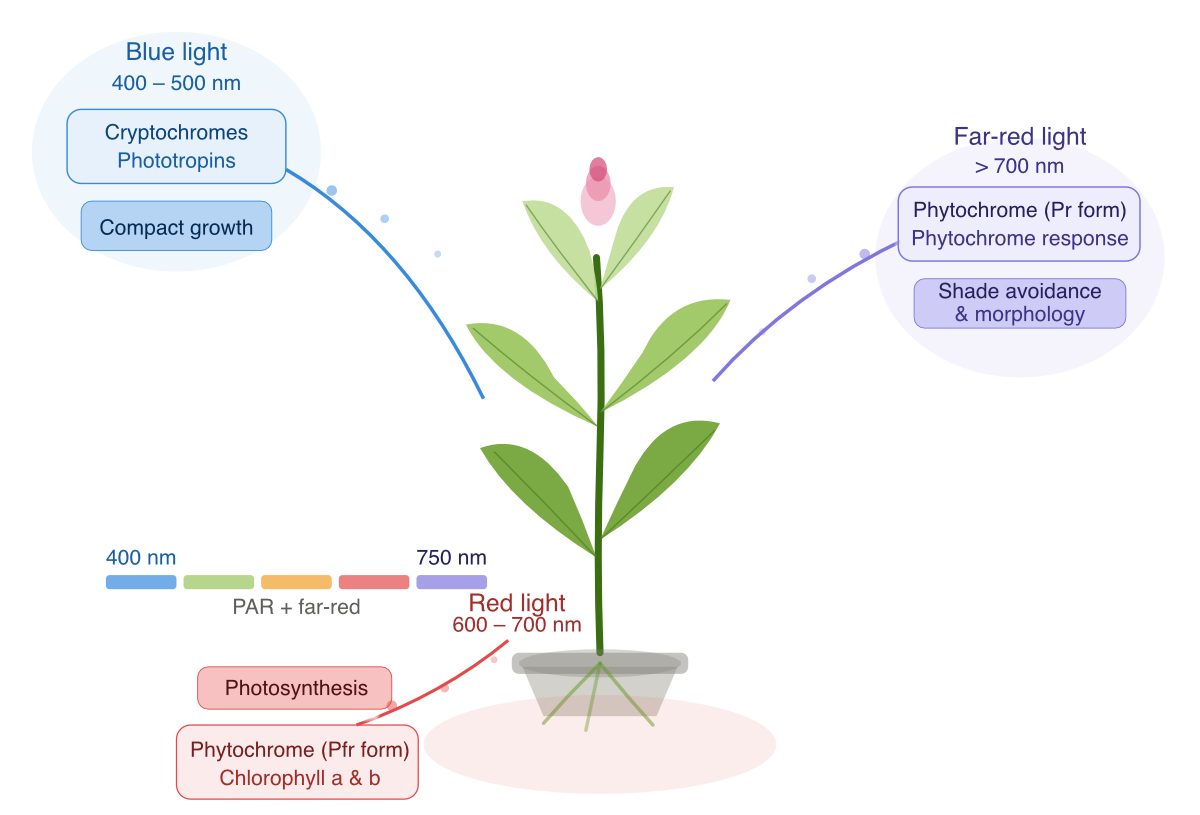
- Cryptochromes and phototropins (blue, 400–500 nm): regulate stomatal conductance, compact growth morphology, secondary metabolite production including vitamin C and flavonoids
- Phytochromes (red and far-red): control flowering timing, shade avoidance response, leaf angle, and circadian rhythms
- General photosynthesis (red, green): drive carbon fixation across leaf layers
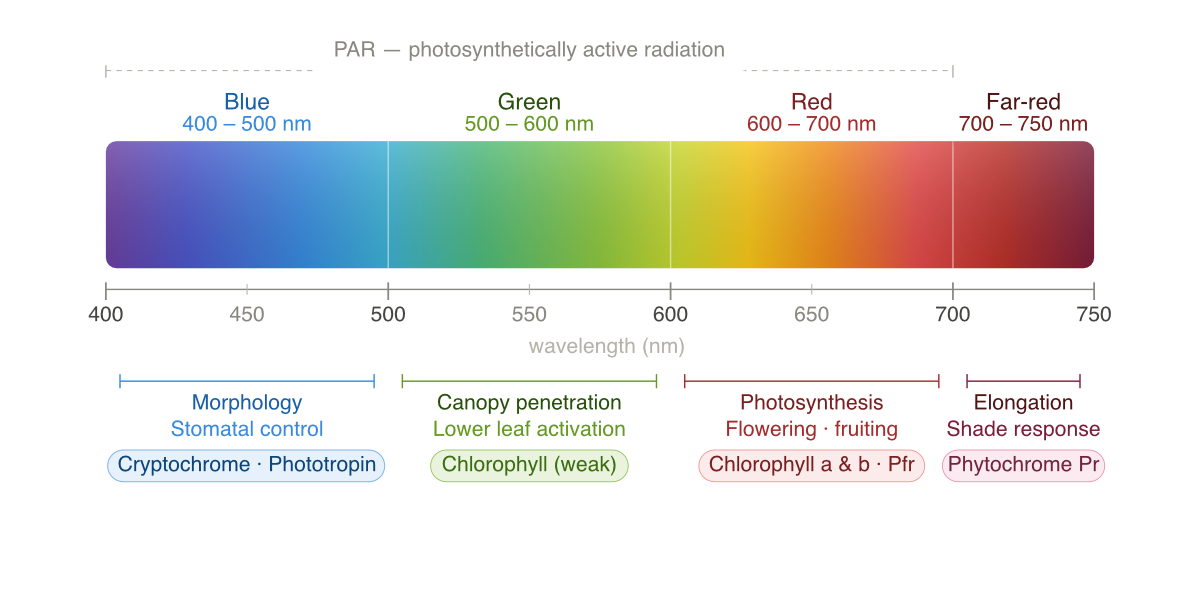
The simultaneous activation of these pathways produces physiological outcomes that narrow-band lighting cannot replicate. Seoul Semiconductor's SunLike trials on lettuce demonstrated antioxidant increases — specifically chlorogenic acid and chicoric acid — exceeding 30% compared to standard white LED controls. Nichia's Hortisolis™ trials reported yield improvements potentially doubling output compared to conventional white LEDs. These are not trivial increments.
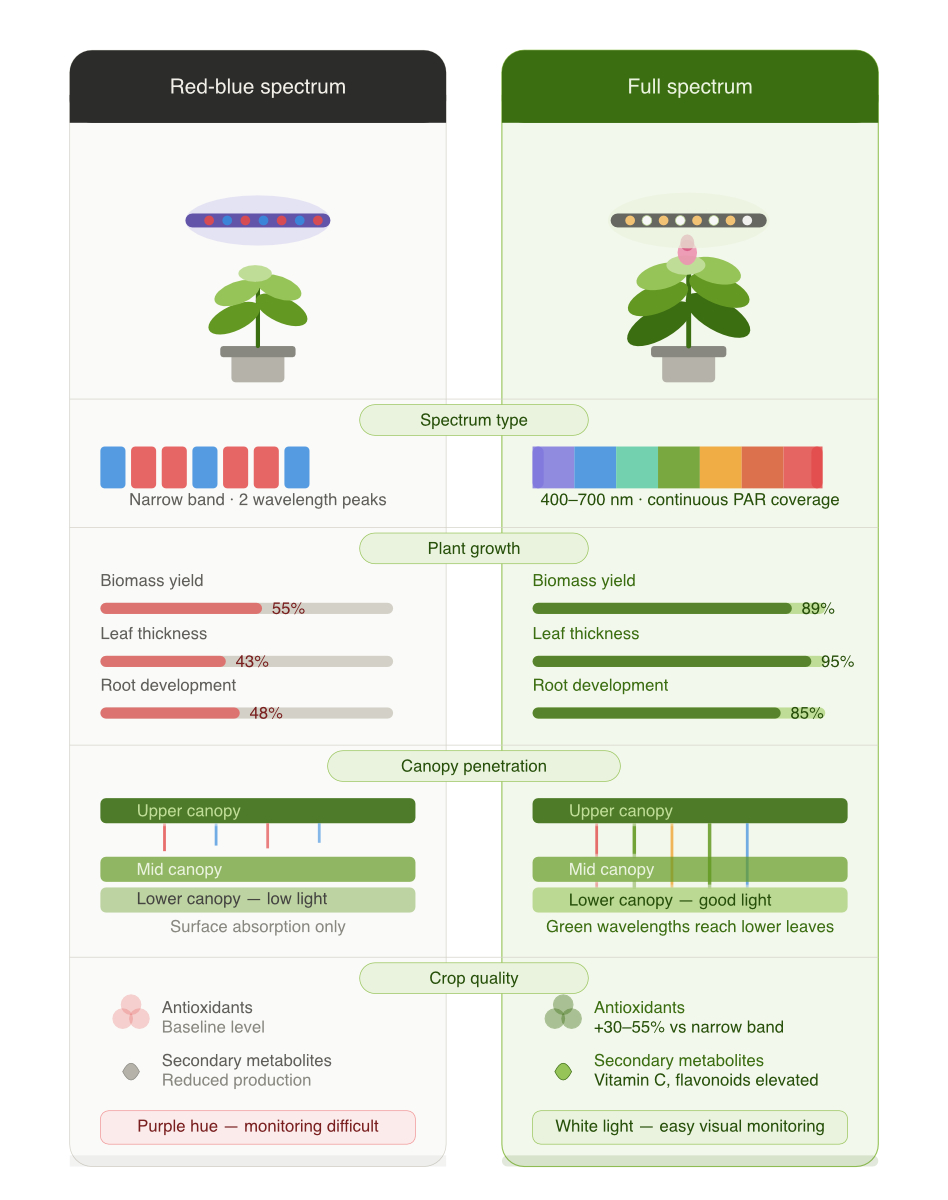
Structurally, plants grown under full spectrum conditions develop thicker leaves, more robust xylem and phloem networks, and higher leaf area indices — all of which contribute to better nutrient transport, longer post-harvest shelf life, and higher resilience during the production cycle.
The Efficacy Tradeoff
The photon efficacy gap between narrow-band and full spectrum systems is real and deserves honest treatment.
White LEDs, which form the backbone of most full spectrum grow light designs, incur phosphor conversion losses that reduce their efficiency relative to colored LEDs. Increasing the proportion of white LEDs in a luminaire raises both LED costs and energy consumption for the same photon flux output. As white LED share rises from 20% to 100% in a mixed white-red system, total cost (LED cost plus energy) increases exponentially.
This means the efficiency case for full spectrum lighting depends heavily on the spectral engineering of the luminaire. Systems that intelligently blend targeted color LEDs (hyper red, far-red, blue) with a carefully selected white LED base can recover much of the efficiency gap while maintaining the biological completeness that full spectrum implies.
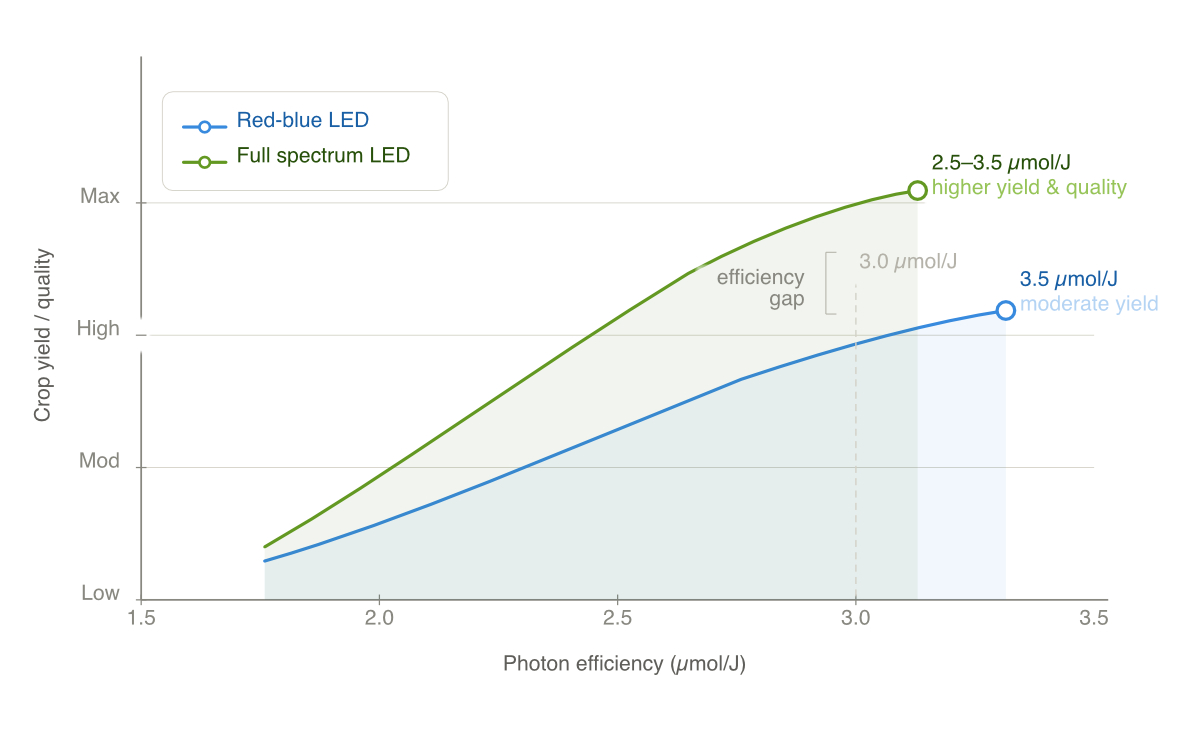
The practical benchmark: well-engineered full spectrum horticulture systems typically achieve photon efficacy in the 2.5–3.5 µmol/J range. Narrow-band red-blue systems can exceed this at the component level, but the yield and quality premiums achievable under full spectrum often more than offset the efficiency difference when evaluated at the system level — particularly when crop quality affects pricing.
Stage-Specific Spectral Dynamics: A Consideration Red-Blue Systems Often Miss
One of the more important findings from recent research is that optimal spectral composition is not static across a crop's life cycle. The timing and sequence of supplemental wavelengths can be as important as the absolute spectral distribution.
Research on lettuce in plant factories with artificial lighting (PFALs) found that supplementing far-red (FR) light during early growth stages followed by red (R) supplementation during later stages increased total fresh weight by 26.1% compared to white-only controls — while simultaneously maintaining nutritional quality. The reverse sequence (R first, then FR) produced a more upright plant architecture, which is specifically valuable for increasing cultivation density in vertical farms.
This dynamic spectral management — changing the spectral recipe at different growth stages — is only practically achievable with modular, controllable LED systems. A fixed-ratio red-blue fixture cannot adapt. Full spectrum systems built on multi-channel architectures can.
Far-red supplementation warrants particular attention. Far-red (>700 nm) is not directly used in photosynthesis, but it activates phytochrome-mediated shade avoidance, which drives stem elongation and leaf expansion — useful for maximizing leaf area at defined stages. However, excess far-red reduces pigment concentration in later developmental phases. The engineering challenge is deploying far-red precisely, not uniformly.
A Practical Decision Framework
The choice between red-blue and full spectrum is not binary — it is a function of what you are growing, at what scale, and what you are selling.
Lean toward red-blue (or red-dominant with targeted blue supplementation) when:
- Crop is a fast-cycling leafy green with biomass as the primary value driver
- Facility economics are extremely energy-sensitive and margin-per-crop is thin
- Spectral control at the growth-stage level is not operationally feasible
Lean toward full spectrum when:
- Crop quality metrics (antioxidant content, taste, texture, shelf life) directly affect pricing or market positioning
- Visual crop monitoring is a regular part of production management
- Multi-crop or multi-stage production requires a single lighting platform to serve different spectral needs
- The crop has documented sensitivity to narrow-band effects (e.g., strawberry runner propagation, herbs with secondary metabolite targets)
- Long-term operational data on plant morphology consistency matters
Consider hybrid architectures when:
- High-volume production of a quality-premium crop demands both efficiency and biological completeness
- Growth-stage lighting adjustments can be automated through the control system
- LED module design allows independent control of color channels at the strip or module level
The Engineering Dimension: Why Spectral Delivery Matters as Much as Spectral Content
Selecting the right spectral composition is necessary but not sufficient. How that spectrum is delivered across the crop canopy determines whether the biological benefits translate into measurable outcomes.
Uniform PPFD distribution across a cultivation area is fundamental — hotspots and shadow zones both compromise yield consistency. Fixture mounting height, optic selection, and module pitch collectively determine uniformity. Wide-angle optics, such as those available from LEDiL, Carclo, or Gaggione, can improve uniformity at lower mounting heights, enabling closer plant proximity in vertical farm applications and reducing the number of fixtures required for a given canopy area.
Module substrate selection also affects long-term performance. In high-humidity horticulture environments, FR4 PCB substrates offer robustness and dimensional stability, with effective thermal management to extend LED lifetime. Flexible polyimide (PI) substrates allow conformal installation in curved or non-planar growing structures. Both PCB types can be configured for the multi-channel LED arrangements that make stage-specific spectral adjustment possible.
Reel-to-Reel (R2R) flex manufacturing — a high-precision automated process — enables consistent production of custom LED strips at the volumes commercial horticulture demands, with reduced interconnects and uniform electrical characteristics across long runs. For large-scale installations where lighting uniformity across hundreds of square meters is non-negotiable, manufacturing process consistency is not a detail — it is a system reliability requirement.
What the Data Actually Supports
Summarizing what controlled research demonstrates, rather than what marketing materials often claim:
- Red-blue combinations are not sufficient on their own for most crops. They require at minimum blue supplementation to avoid red-light syndrome, and benefit substantially from green wavelengths for canopy penetration and photosynthetic efficiency.
- Full spectrum systems consistently outperform narrow-band systems on fresh weight, dry weight, secondary metabolite content, and structural plant quality across the majority of documented crop trials.
- The efficiency penalty of full spectrum is real but manageable through intelligent LED selection and ratio optimization — particularly by combining targeted hyper red and far-red LEDs with white LED bases rather than relying on white LEDs alone.
- Spectral sequencing across growth stages is an underutilized tool that can improve both yield and quality simultaneously — but requires programmable, multi-channel lighting systems to execute.
- Crop monitoring under full spectrum lighting provides meaningful operational value that is absent in purple-hued narrow-band environments.
Closing Perspective
The red-blue versus full spectrum debate often gets framed as an efficiency question. That framing is incomplete. Efficiency in photon delivery per watt is one input into an economic model that includes yield per cycle, crop quality premiums, production consistency, and operational labor.
For growers producing commodity leafy greens at the lowest possible cost per kilogram, the efficiency argument for narrow-band lighting has some validity. For growers differentiating on quality, working with high-value crops, or building systems intended to serve multiple crops over time, the evidence consistently supports full spectrum approaches — provided the spectral engineering is done deliberately rather than by simply assembling "white plus red" and calling it complete.
The spectrum is not a single decision. It is a design variable, and it deserves the same engineering rigor applied to any other system parameter.
About Lumistrips
Lumistrips designs and manufactures custom LED modules from its facility in Hechingen, Germany, with over 20 years of experience in precision LED technology. For horticulture applications, Lumistrips engineers multi-channel LED modules using components from Nichia, Cree, ams OSRAM, Seoul Semiconductor, and LumiLeds — enabling growers and lighting system integrators to specify exact spectral compositions rather than adapting off-the-shelf solutions. Production processes including Reel-to-Reel flex manufacturing and SMT on FR4 and aluminum substrates support both prototype development and high-volume commercial deployment.







